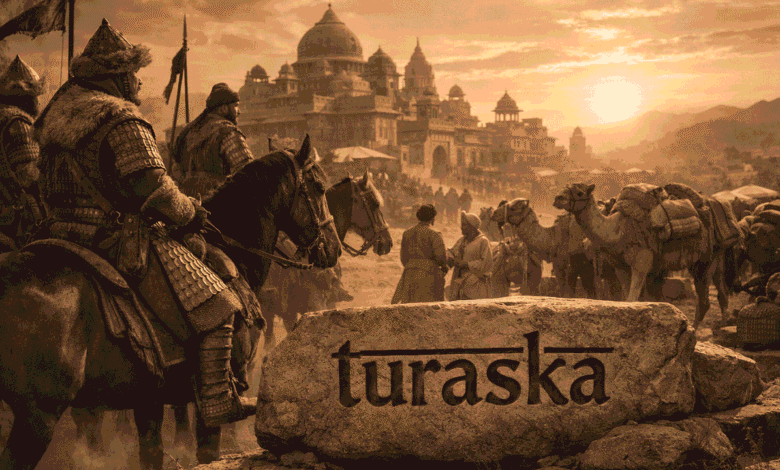
The word turaska carries a long and layered history that many readers are not familiar with today. It appears in ancient Sanskrit writings and was used to describe people who came from regions beyond the northwestern borders of the Indian subcontinent. Over time, turaska became more than just a label for outsiders, reflecting how early societies understood foreign cultures and identities. This term holds value not only in historical studies but also in understanding how language evolves across generations. Exploring turaska opens a window into a past shaped by migration, trade, and cultural interaction.
Understanding the meaning of turaska in historical context
The term turaska was primarily used in ancient India to refer to people of Turkic origin or those coming from Central Asian regions. It was not a precise ethnic term but rather a broad classification used by scholars and writers of that era. Ancient texts often grouped unfamiliar communities under such labels, and turaska became one of those identifiers. The word reflects how early societies perceived differences in language, appearance, and lifestyle. In many cases, it was used to describe both traders and invading forces.
In Sanskrit literature, turaska appears alongside other terms used for foreigners, showing a pattern in how outsiders were categorized. These classifications were influenced by geography and political encounters rather than strict cultural understanding. As a result, turaska does not point to a single tribe or nation. Instead, it represents a collective identity shaped by interaction and observation. This makes the term especially interesting for historians studying early cross-cultural contact.
The origin and linguistic evolution of turaska
The origin of turaska can be traced back to the Sanskrit adaptation of foreign words related to Turkic peoples. Variations like turushka and turuska appear in different manuscripts, reflecting changes in pronunciation and writing styles. These variations developed as the term passed through regions and languages over centuries. Language often shifts when it absorbs unfamiliar sounds, and turaska is a clear example of that process. It shows how ancient scholars tried to interpret and record names from distant lands.
Over time, the meaning of turaska expanded and shifted slightly depending on context. In some regions, it became closely associated with specific groups, while in others it remained a general term for outsiders. The connection between turaska and modern words like “Turk” or “Turkey” highlights how language evolves across time. This transformation did not happen suddenly but through gradual adaptation and repeated use. Studying turaska helps trace the journey of words across cultures and generations.
Turaska in ancient Sanskrit literature
Ancient Sanskrit texts provide valuable references to turaska and its usage. Works like narrative collections and literary treatises mention turaska when describing foreign characters or distant lands. These mentions often appear in stories involving travel, war, or trade. The presence of turaska in such texts shows that interactions with Central Asian groups were known and recorded. It also suggests that these interactions had enough impact to be preserved in literature.
Writers used turaska to create contrast between local and foreign cultures within their stories. This helped audiences understand the differences between familiar and unfamiliar societies. In some cases, turaska characters were portrayed as skilled warriors or traders. These depictions reflect both curiosity and caution toward outsiders. The use of turaska in literature gives insight into how people of that time viewed the wider world.
The role of turaska in describing foreign identities
The concept of turaska highlights how ancient societies categorized people who were different from them. Without modern ideas of nationality, broad labels were commonly used to describe groups from distant regions. Turaska served this purpose by grouping together people who shared certain perceived traits. These traits often included clothing, language, and methods of warfare. This approach simplified complex identities into a single term.
Using turaska also reveals how cultural boundaries were understood in early times. It shows that identity was often defined by contrast rather than detailed knowledge. People were labeled based on how they appeared to outsiders, not how they identified themselves. This makes turaska a useful example of early identity formation. It also reminds us that such labels can carry both descriptive and generalized meanings.
Connections between turaska and Central Asian regions
The link between turaska and Central Asia is rooted in historical movement across regions. Central Asia served as a bridge between different civilizations, allowing trade and migration to flourish. Groups identified as turaska often traveled through these routes, bringing new ideas and goods. These interactions influenced both sides, shaping culture and economy. The term turaska reflects this ongoing exchange.
Some key connections include:
- Movement of traders along early trade routes
- Military campaigns that brought Central Asian groups into the subcontinent
- Cultural exchanges in art, language, and traditions
- Introduction of new technologies and warfare techniques
These connections show that turaska was not just a label but part of a larger story of interaction. It represents a period when borders were fluid and cultures constantly influenced each other. Understanding this context adds depth to the meaning of turaska.
Turaska and the evolution of cultural perception
As time passed, the perception of turaska changed along with historical developments. What began as a general label for outsiders gradually took on more specific associations. In some cases, it became linked to certain political or military groups. In others, it remained a broader cultural term. This shift reflects how language adapts to changing realities.
The evolution of turaska also mirrors changes in how societies view foreign cultures. Early descriptions were often based on limited interaction, leading to simplified ideas. As contact increased, these perceptions became more detailed and nuanced. The journey of turaska shows how understanding grows over time. It highlights the role of language in shaping and reshaping cultural awareness.
Modern relevance of the term turaska
Although turaska is not commonly used in everyday language today, it still holds importance in historical and linguistic studies. Scholars use it to understand how ancient texts described foreign groups. It also provides insight into early interactions between South Asia and Central Asia. The term helps connect past narratives with present knowledge. This makes turaska valuable for both academic research and general learning.
In some modern languages, traces of turaska can still be found in different forms. These variations show how the word has traveled across time and regions. While its meaning may have shifted, its roots remain tied to the idea of cultural exchange. The continued study of turaska keeps this historical connection alive. It serves as a reminder of how interconnected human history has always been.
Why turaska remains an important historical concept
The importance of turaska lies in its ability to reveal patterns of interaction and perception. It is more than just a word; it represents a way of understanding the world in ancient times. By studying turaska, we gain insight into how societies categorized and interpreted unfamiliar cultures. This helps build a clearer picture of historical relationships. It also shows the role of language in preserving these perspectives.
Key reasons why turaska matters include:
- It reflects early contact between different civilizations
- It shows how language adapts to new cultural encounters
- It provides evidence of trade and migration patterns
- It helps interpret ancient literary and historical texts
These points highlight the broader significance of turaska beyond its literal meaning. It connects language, history, and culture in a meaningful way.
Conclusion
The story of turaska is a reminder that words carry more than simple definitions. They hold traces of movement, interaction, and perception from the past. From its roots in Sanskrit literature to its connection with Central Asian cultures, turaska reflects a period of active exchange between societies. It shows how people once understood those who were different from them and how those understandings evolved over time. Even today, studying turaska offers valuable insight into history, language, and cultural identity.
FAQs
- What does turaska mean in ancient texts?
Turaska was used in ancient Sanskrit writings to describe people from Central Asia, especially those of Turkic origin. - Is turaska the name of a specific tribe?
No, turaska is a broad term and does not refer to a single tribe or nation. - Where is the word turaska found?
It appears in several ancient Sanskrit texts, including literary and historical works. - How is turaska related to modern terms like Turkey?
The word shares linguistic roots with terms related to Turkic peoples, showing how language evolves over time. - Why is turaska important today?
Turaska helps researchers understand historical interactions, cultural perceptions, and the development of language.